
Chimichurri vs Salsa Criolla: What's the Difference, and When to Use Each
Two green-and-red sauces sit on every Argentine table. They are not interchangeable, and learning why is the fastest way to eat asado the way it is meant to be eaten.
Pull a thin strip of skirt steak off the coals and it keeps cooking in your hand, the fat still hissing. You have maybe ninety seconds before it goes from perfect to past it. On the cutting board in front of you sit two bowls. One is loose and green, flecked dark with oregano, a slick of oil pooling at the edge. The other is a bright confetti of chopped onion, tomato, and red pepper sitting in its own pink vinegar. Reach for the wrong one and the bite is still good. Reach for the right one and you understand why Argentines argue about this.
The two bowls are chimichurri and salsa criolla. Tourists tend to lump them together as "the green sauce and the red sauce," or worse, assume one is just a chunkier version of the other. They are not. They are built differently, they taste different, and they do different jobs at the table. Knowing which is which, and when to use each, is the single most useful thing you can learn before sitting down to an Argentine asado.
What is the difference between chimichurri and salsa criolla?
Chimichurri is an oil-and-herb sauce: finely chopped parsley, garlic, dried oregano, and crushed red pepper, loosened with oil and a splash of vinegar. Salsa criolla is a chopped fresh-vegetable relish: diced onion, tomato, and bell pepper, dressed with vinegar, oil, and salt. The first is herb-driven and oily. The second is vegetable-driven and crunchy. That is the whole distinction in one breath, and everything else is detail.
Put plainly: chimichurri is a sauce you spoon over hot grilled meat to add herbal punch and acidity. Salsa criolla is a cold, fresh relish you use to add bite, moisture, and crunch, most famously inside an empanada or alongside a sausage. They overlap because both are green-and-red, both are acidic, and both show up at the same meal. But the textures and the flavors land in completely different places on the tongue.
Here is the fast reference, then the why behind it.
| Chimichurri | Salsa criolla | |
|---|---|---|
| Base | Parsley, garlic, dried oregano | Onion, tomato, bell pepper |
| Texture | Loose, oily, finely chopped | Chunky, crunchy, watery |
| Dominant flavor | Herb and garlic, sharp acid | Sweet onion, fresh vegetable, vinegar |
| Served | Spooned over hot meat | Cold relish, often inside or beside |
| Best on | Skirt steak, ribeye, provoleta | Empanadas, chorizo, sausages |
What exactly is chimichurri made of?
Chimichurri is an oil-and-herb sauce whose backbone is flat-leaf parsley, garlic, dried oregano, red wine or sherry vinegar, crushed red pepper, and a neutral or olive oil, seasoned hard with salt. There is no single canonical recipe, which is the point. Every Argentine family and every cook guards a slightly different ratio, and the argument over whether the parsley should be hand-chopped or blitzed, whether to add water, whether smoked paprika belongs anywhere near it, is a national pastime.
What matters is the function. Chimichurri is acid and herb against fat and char. A skirt steak or an Argentinian ribeye comes off hardwood coals carrying smoke, salt, and rendered fat. Spoon chimichurri across it and the vinegar cuts the richness, the parsley brightens it, the garlic deepens it, and the oil carries all of that into the grain of the meat. It is built to be eaten the moment it hits hot beef. Let it sit too long in the fridge and the garlic turns harsh and the oregano goes flat. Good chimichurri is a little raw and a little aggressive on its own, then becomes exactly right against the meat.
The mistake people make is treating it like a marinade or a dip. It can do those jobs in a pinch, but its real home is the finishing spoonful, applied at the table, while everything is still too hot to touch comfortably.
What is salsa criolla, and why is it different?
Salsa criolla is a cold, chopped relish of raw onion, tomato, and red and green bell pepper, dressed in vinegar, oil, and salt, and ideally rested for an hour so the onion softens and surrenders its sharp edge. Where chimichurri is a sauce you pour, salsa criolla is closer to a fresh salad cut small enough to scatter by the spoonful.
The texture is the entire reason it exists: crunch and cold against soft and hot. A chorizo split open off the grill, blistered and fatty, gets a heap of salsa criolla and suddenly there is acidity, snap, and a vegetal freshness fighting the richness in a way chimichurri's oil simply cannot. The onion is the star, mellowed by its rest in vinegar but still assertive, and the tomato adds sweetness and water that loosens the whole thing into something juicy.
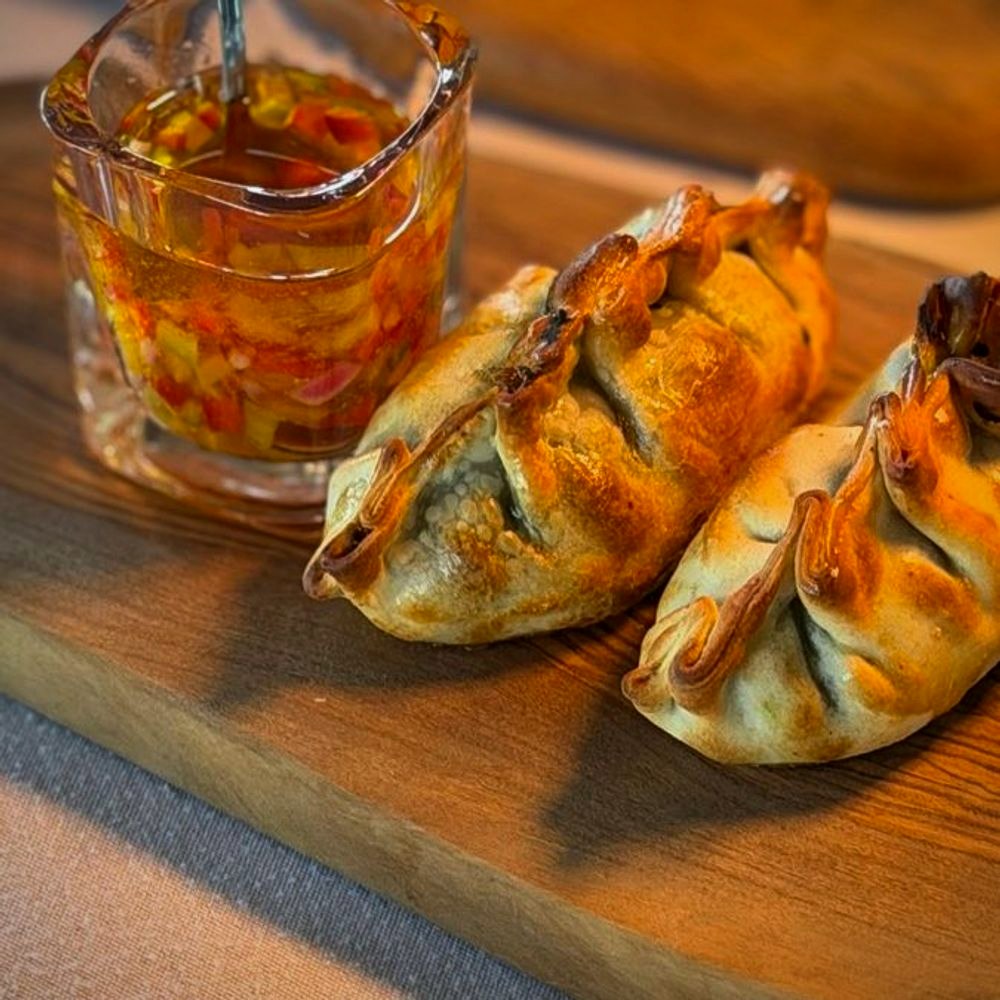
This is also why salsa criolla is the traditional partner to empanadas. At Hill Top Winery, the Valley Center kitchen run by Mendoza-born chef Pablo Ranea sends out handmade chorizo, veggie, salteña, and mendocina empanadas with salsa criolla and llajua, the Bolivian chili sauce, on the side. You tear the corner off a hot empanada, spoon in a little criolla, and the cold crunch cuts straight through the warm pastry and filling. Chimichurri inside an empanada would just make it oily. The jobs are not the same. (If you want the long version, here is our guide to Argentine empanadas and how to eat them.)
When should you use each one?
Use chimichurri when the food is hot, grilled, and rich, and you want herb and acid to cut through it. Use salsa criolla when you want cold crunch, fresh vegetable, and bite, especially with anything wrapped, stuffed, or sausage-shaped. That is the rule that covers most of an asado.
Walk it through a real table:
- Skirt steak or ribeye: chimichurri, every time. The herb and oil were made for charred beef. More on the cut itself in our skirt steak asado guide.
- Provoleta, the grilled provolone that comes off the fire blistered and molten: chimichurri, or a drizzle of oregano oil. The acid keeps the cheese from feeling heavy.
- Empanadas: salsa criolla, with llajua if you want heat. This is the classic pairing.
- Chorizo and sausages: salsa criolla for crunch, though plenty of people happily use both at once.
- Grilled octopus or vegetables: either works. Chimichurri leans richer, criolla leans fresher.
And the honest answer to the question every table eventually asks: yes, you can use both on the same plate, and many Argentines do. A choripan with chimichurri and a spoon of criolla is a legitimate and excellent thing. The "rule" is a starting point, not a fence. But if you only get one sauce on one bite, match it to the food, and you will taste why the two have stayed separate on Argentine tables for generations.
Why two sauces at all? The logic of the asado
The asado is not a dish, it is a sequence: sausages and offal first, then the empanadas and provoleta, then the big cuts, all of it cooked slowly over hardwood coals rather than gas, because the smoke is part of the seasoning. Across that long arc of fattier and fattier food, you need two different tools. One sauce that adds oily, herbal depth to lean grilled muscle. Another that adds cold, sharp, watery relief when the richness piles up. Chimichurri and salsa criolla are not competitors. They are two answers to the same problem, which is how to keep eating fire-cooked meat for three hours and want more.
That logic is exactly what a Mendoza cook brings to North County San Diego. At Hill Top Winery, on a vineyard hilltop at 30801 Valley Center Road, about forty-five minutes from downtown San Diego and a short drive from Escondido, the technique is Argentine and the fruit is local. The kitchen pours its own Valley Center wines against the grill, a Tempranillo or a Ranch House Red blend standing up to the char where a lighter wine would vanish. If you want to taste both sauces side by side, the easiest way is to order the empanadas and a steak together and let the bowls sort themselves out.
Now you will never reach for the wrong bowl again. Hot meat, herb and oil: chimichurri. Cold crunch, onion and vinegar: salsa criolla. Get the steak before it cools.
Hungry to taste the difference in person? See the Argentine asado menu, then book a table and check the Saturday live music schedule before you plan a visit. Hill Top Winery is open Thursday through Sunday in Valley Center, with live music every Saturday from 4:30 to 7:30 PM on the patio.
Frequently asked
What is the main difference between chimichurri and salsa criolla?
Chimichurri is an oil-and-herb sauce made from parsley, garlic, oregano, vinegar, and crushed red pepper, spooned over hot grilled meat. Salsa criolla is a cold chopped relish of onion, tomato, and bell pepper in vinegar, used for crunch and freshness, especially with empanadas and sausages. One is herb-driven and oily, the other vegetable-driven and crunchy.
Which sauce goes on steak, chimichurri or salsa criolla?
Chimichurri goes on steak. Its herb, garlic, and vinegar cut through the fat and char of grilled cuts like skirt steak and ribeye. Salsa criolla is better suited to empanadas, chorizo, and sausages, where its cold crunch contrasts with warm, rich food.
What is salsa criolla used for?
Salsa criolla is used as a cold, fresh relish that adds crunch, acidity, and moisture. It is the traditional partner to Argentine empanadas and grilled sausages, spooned in or alongside so the cold vegetables cut through the warm filling or fatty meat.
Can you use chimichurri and salsa criolla together?
Yes. Many Argentines use both at the same meal, and a sausage sandwich with chimichurri and a spoon of salsa criolla is a classic combination. The traditional pairings are a guideline, not a rule: match the sauce to the food, but using both is common and welcome.
Where can I try authentic chimichurri and salsa criolla near San Diego?
Hill Top Winery serves both at its Argentine asado restaurant on a vineyard hilltop at 30801 Valley Center Road in Valley Center, about 45 minutes from downtown San Diego and near Escondido. The kitchen, run by Mendoza-born chef Pablo Ranea, serves handmade empanadas with salsa criolla and llajua, plus grilled steaks with chimichurri. It is open Thursday through Sunday.
Argentine fire, Valley Center roots
Taste it on the hilltop.
Live-fire Argentine cooking by Chef Pablo Ranea, paired with Hill Top wine and a sunset over the vines.