What Is Asado? The Argentine Live-Fire Tradition, Explained
Hardwood burned down to coals, meat laid low over the embers, and a meal that refuses to be rushed. A field guide to the ritual, and where it lands in North County San Diego.
The smell reaches you before the food does. Oak burned down past flame to a low orange bed, the sweetish bite of fat hitting hot iron, woodsmoke flattening across a hilltop as the four-thirty light goes gold. A guitar finds its first chord on the patio. Off to the side, a man in an apron is doing almost nothing, which is the whole point. He is watching coals.
That patience is asado. Not a recipe, not a single cut of beef, but a way of cooking over live fire that Argentina has spent a couple of centuries turning into something closer to a civic ritual than a meal. You can learn the mechanics in an afternoon. The judgment takes years, and it is the judgment you are really tasting.
What is asado, exactly?

Asado is the Argentine tradition of cooking meat slowly over wood coals or open flame, and it is also the name of the social gathering built around that cooking. The word does triple duty: it means the barbecue itself, the event where people eat it, and in some regions a specific cut of short rib. The person running the fire is the asador, and their authority over the grill is rarely questioned.
What separates asado from a backyard grill-out is the relationship to the fire. You do not cook over flames. You burn hardwood or charcoal down to embers first, then cook over the radiant heat of those coals, often for hours. The grill, called a parrilla, sits over the bed of embers, and the asador rakes fresh coals beneath different cuts as they need them. Heat is managed by moving fire, not by turning a dial.
The result is meat that cooks gently and evenly, taking on smoke without scorching, the fat rendering slowly instead of flaring. That is the why behind the how. A thick cut over screaming flame chars outside and stays raw within. The same cut over a moderate coal bed, given time, arrives with a deep crust and an interior cooked all the way through, tasting of the wood it sat above.
Where does asado come from?
Asado traces to the gauchos, the cattle herders of the Argentine and Uruguayan Pampas in the eighteenth and nineteenth centuries, who cooked beef over open fires on the grasslands. With near-limitless cattle and little else at hand, fire-cooked meat became the practical center of the diet, then the cultural center of the table.
Over time the practice formalized into two main methods. The asado al asador, where whole animals or large cuts are splayed on an iron cross staked beside the fire and cooked by reflected heat, is the old rural way. The parrilla grill is the more common home and restaurant version. Both run on the same logic: hardwood, coals, time, and a cook willing to give it all three.
Today the asado is Sunday in Argentina. It is the family gathering, the welcome for a guest, the thing you host to mark anything worth marking. The food matters, but the duration matters as much. An asado is built to take the whole afternoon, and rushing it misses the point as surely as a cold grill would.
What gets cooked at an asado?
A traditional asado moves in courses, and beef is the headline but rarely the opener. The sequence is part of the ritual. It usually begins with the achuras, the offal and sausages that cook fastest: chorizo, morcilla (blood sausage), sweetbreads, kidneys. Provoleta, a thick disc of provolone grilled until it blisters and goes molten at the center, often joins this first wave. Then come the main cuts.
Common players on the parrilla include:
- Tira de asado, beef short ribs cut thin across the bone, the cut that often gives the meal its name.
- Vacío, the flank or flap, prized for its grain and chew.
- Bife de chorizo, a thick sirloin steak.
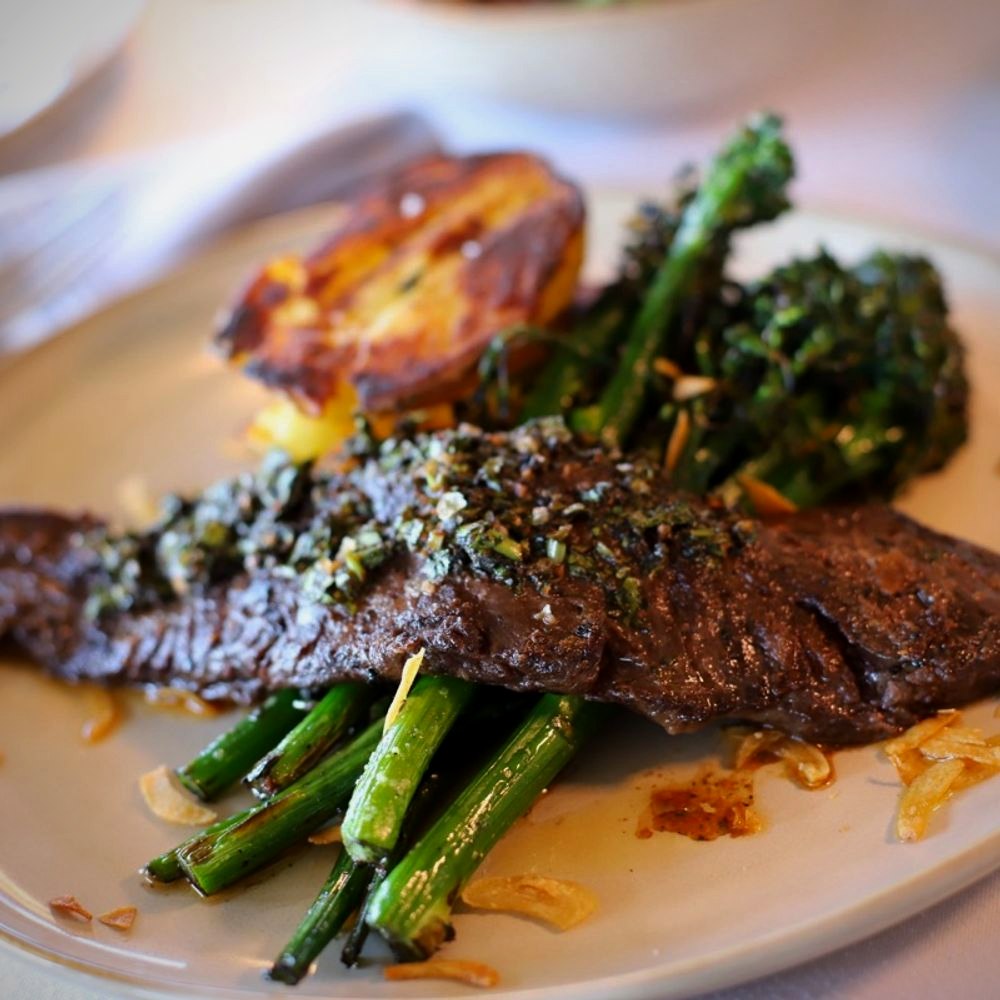
- Entraña, the skirt steak, thin and fast-cooking with deep beefy flavor.
- Matambre, a thin sheet of meat sometimes rolled and stuffed.
Two things bind it all together. Chimichurri, the uncooked sauce of parsley, garlic, oregano, vinegar, and oil, is the classic counterpoint to rich grilled beef: sharp, herbal, cutting straight through the fat. Salsa criolla, a bright relish of diced tomato, onion, and bell pepper, does similar work with a softer edge. Neither is a marinade. The Argentine instinct is to salt the meat simply, cook it well, and bring the acid and herbs to the table, not to the grill.
Why hardwood coals instead of gas?
Hardwood coals matter because they deliver steady radiant heat and a clean smoke that gas cannot reproduce, and because controlling the fire by hand is central to how an asador works. This is the part that resists shortcuts.
Burning wood, often a dense hardwood or quebracho charcoal in Argentina, down to embers gives the cook a renewable, adjustable heat source. Push coals under a cut to drive it harder. Pull them away to hold a finished piece warm. Build a hotter zone for sausages and a gentler one for a heavy rib. The fire becomes a tool you sculpt across the whole length of the grill, and the smoke rising through the meat is part of the seasoning, not a byproduct.
Thin cuts like skirt steak get a fast pass over a hotter section, the goal being a seared crust before the inside overcooks. A heavy short rib goes low and slow, sometimes bone-side down for a long stretch, the connective tissue softening over forty-five minutes or more. Same fire, different distances, different times. That calibration, built over years at the grill, is the craft hiding inside what looks like a man standing around.
How does asado land in North County San Diego?
Asado travels well, because the technique is portable even when the cattle culture is not, and North County San Diego happens to have the climate and the open evenings the ritual was built for. About forty-five minutes north of downtown San Diego, up near Escondido and within reach of the Temecula wine country, the long warm dusk does much of the work the Pampas sky once did.
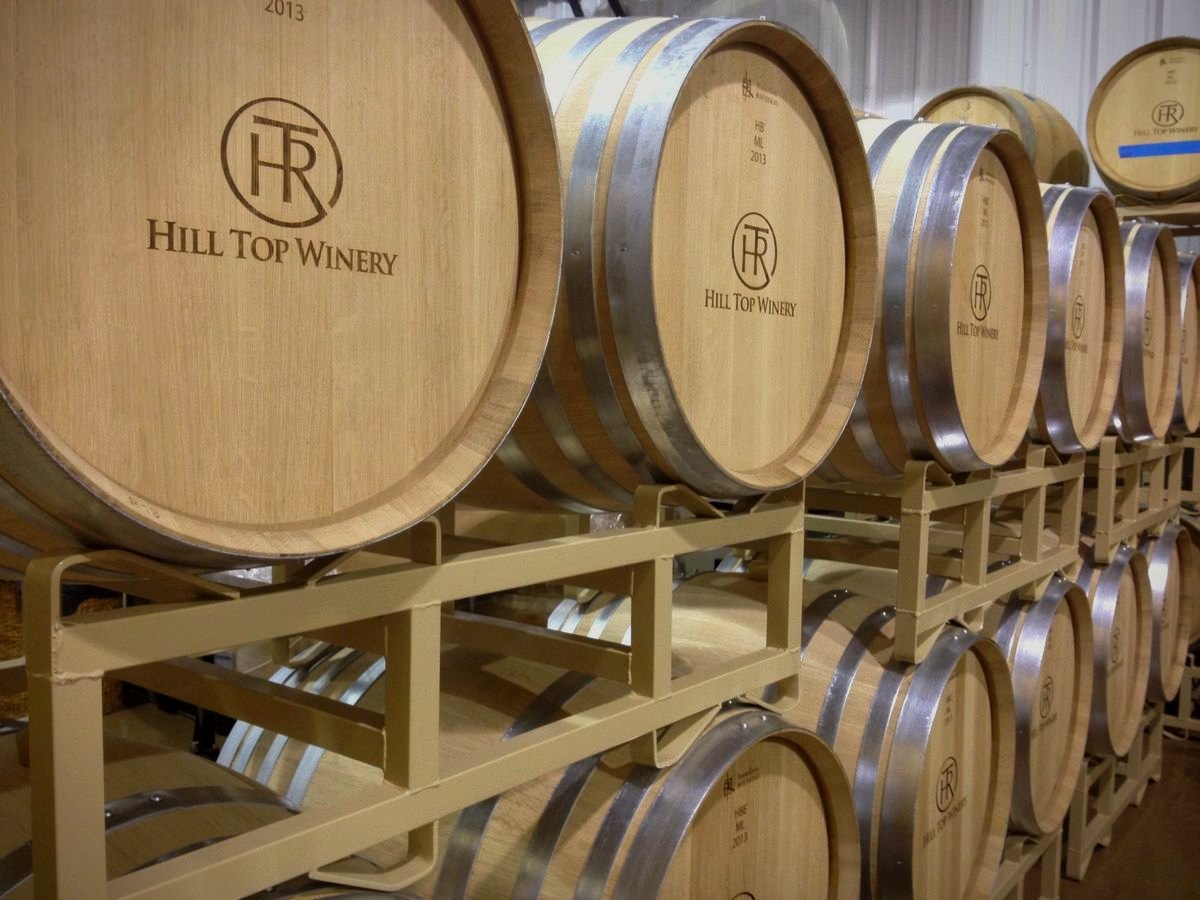
This is where Hill Top Winery sits, on a vineyard hilltop in Valley Center, running an Argentine asado kitchen under Chef Pablo Ranea, who comes out of Mendoza, the heart of Argentine wine country. The menu reads like the tradition translated to local fruit and a wood fire: handmade empanadas in chorizo, veggie, salteña, and mendocina styles, served with salsa criolla and the Bolivian-rooted chile sauce llajua; provoleta; grilled octopus; Uruguayan skirt steak; Argentinian ribeye; handmade orecchiette; and dulce de leche flan to close. Chimichurri sits on the table, where it belongs.
The provenance is the interesting part. Mendoza technique meets San Diego County produce and the winery's own bottles, made in Valley Center. The list runs to the reds that flatter live-fire beef: Cabernet Sauvignon, Merlot, Syrah, Tempranillo, Sangiovese, Zinfandel, and the Ranch House Red blends, alongside Chardonnay, Viognier, Pinot Gris, and rosés. There is a reason a Tempranillo, with its savory grip, gets poured against the grilled octopus rather than a big jammy Cabernet. The wine is chosen to argue with the food, not echo it.
When is the best time to experience it?
The signature moment is Saturday, when live music runs from 4:30 to 7:30 PM on the patio as the sun goes down over the vineyard. That window is the asado idea distilled: fire, food, music, and a long unhurried stretch of light. The kitchen also serves a Sunday brunch, and the property hosts weddings, private events, and pop-up dinners through the week.
A note in the spirit of honest reporting. The patio cools quickly once the sun is fully down, so the back half of a Saturday evening rewards a jacket. Empanada flavors can sell out late in a busy service. And like any real asado, the meal is not built for speed. That is a feature, not a flaw. You are meant to settle in.
Hours run Thursday through Sunday. The address is 30801 Valley Center Road, and the phone is (760) 913-1013. You can check the music schedule, browse the full menu, or make a reservation before you drive up.
The takeaway
Asado is not a dish you order. It is a decision to cook slowly, over real fire, among people, for longer than is strictly efficient. The gauchos understood that the meat was only ever half of it.
Late on a Saturday, the coals are down to a dull glow, the guitar has gone quiet, and the flan is mostly gone. Nobody at the table has looked at a phone in an hour. That is what the fire was for.
Frequently asked
What is asado in simple terms?
Asado is the Argentine tradition of cooking meat slowly over wood coals or open flame, and it is also the name of the social gathering built around it. Hardwood is burned down to embers first, then meat cooks over the radiant heat of those coals, often for hours, while the cook (the asador) manages the fire by hand.
What is the difference between asado and regular barbecue?
The key difference is the fire. Asado cooks over the radiant heat of wood coals rather than over flames or with sauce-heavy marinades. The asador burns hardwood down to embers and controls temperature by moving coals under different cuts, and the meat is typically seasoned simply with salt, with chimichurri and salsa criolla served at the table.
What is usually served at an asado?
An asado moves in courses, often starting with chorizo, morcilla, sweetbreads, and grilled provoleta cheese, then moving to beef cuts like short ribs (tira de asado), flank (vacío), sirloin (bife de chorizo), and skirt steak (entraña). Chimichurri and salsa criolla accompany the meat.
Where can I experience Argentine asado near San Diego?
Hill Top Winery is an Argentine asado restaurant on a vineyard hilltop in Valley Center, California, about 45 minutes north of downtown San Diego and near Escondido. It serves dishes from Mendoza-born Chef Pablo Ranea Thursday through Sunday, including handmade empanadas, provoleta, grilled octopus, and Uruguayan skirt steak, with live music on the patio every Saturday from 4:30 to 7:30 PM.
Why is hardwood important for asado?
Hardwood coals give the cook steady radiant heat and a clean smoke that gas grills cannot match, plus the ability to manage temperature by hand. Pushing coals under a cut cooks it harder, pulling them away holds it warm, which lets the asador run hotter and gentler zones across one grill for thin and thick cuts alike.
Argentine fire, Valley Center roots
Taste it on the hilltop.
Live-fire Argentine cooking by Chef Pablo Ranea, paired with Hill Top wine and a sunset over the vines.